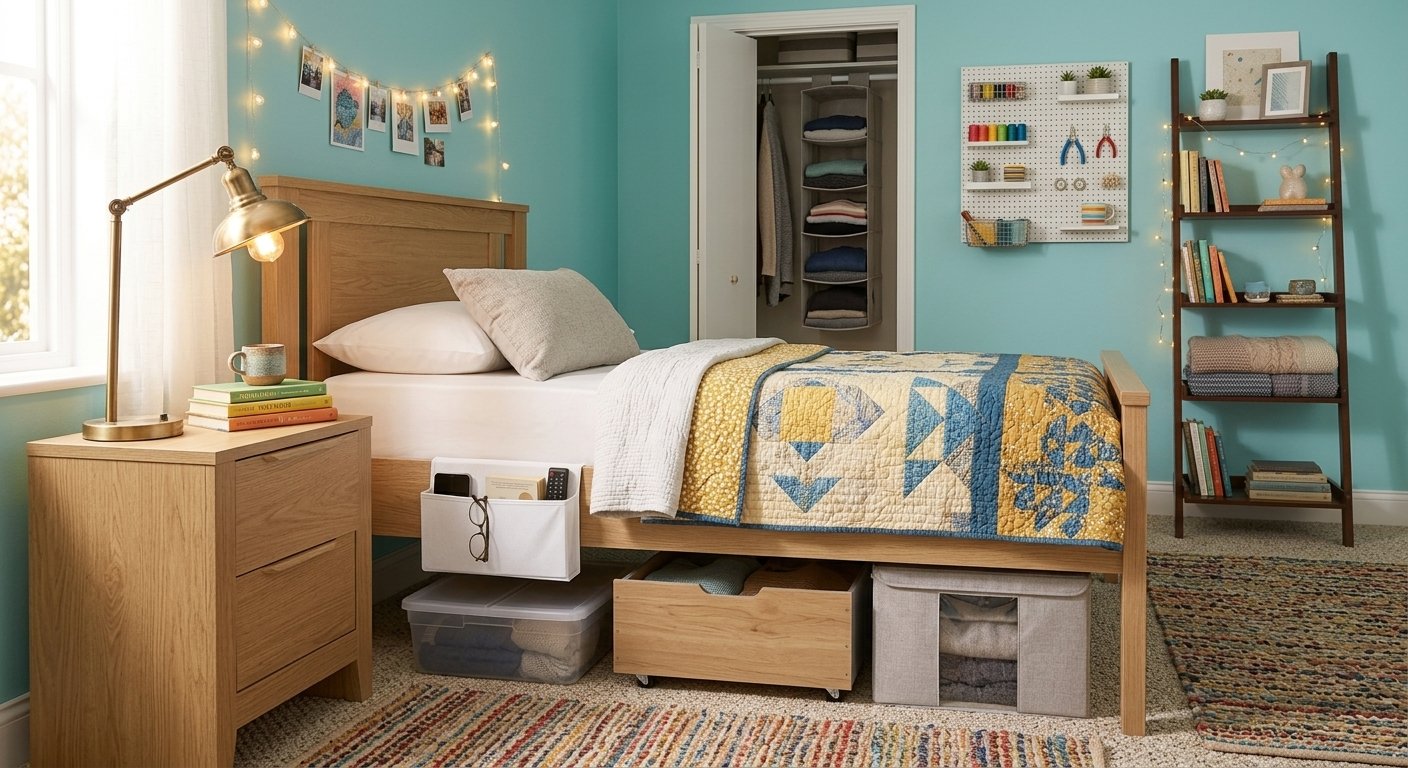

Small bedrooms can feel cramped and cluttered. Styling them can be frustrating. However, a small bedroom doesn’t have to be restrictive. Smart choices in layout, furniture, color, storage, and décor can change the space. With the right ideas, your bedroom can become spacious, comfortable, and stylish. Here are 15 small bedroom ideas to make your space feel more open.
In This Article
Creating the Illusion of More Space
Creating the Illusion of More Space
1. Use Light Colors to Open Up the Room
One easy way to make a small bedroom feel larger is to use light colors. A lighter palette reflects more light, making the room feel brighter and less heavy. Soft white, cream, light beige, pale grey, and other gentle tones create a calm, inviting look. Use these shades on walls, bedding, curtains, and rugs. Then, add one or two accent colors for contrast. For a cohesive look, keep larger surfaces, such as walls and bedding, in similar light tones. Use smaller décor pieces for variety. If you love darker shades, use them sparingly as accents. The goal is not a completely white room, but a lighter, more unified space.
2. Add a Large Mirror
Another simple way to make a small bedroom feel bigger is by adding a large mirror. Mirrors reflect natural light and parts of the room. This creates depth and makes the space appear brighter and more open.
Mirror options: Consider a full-length mirror, a large wall mirror, or mirrored wardrobe doors if wall space is limited.
Where to place it: Place a mirror near or across from a window to reflect light. If floor space is tight, try a wall-mounted mirror or one behind a door. Before choosing a spot, check what the mirror will reflect and aim it at a tidy area. For a cohesive look, select a frame that matches your bedroom’s style.
3. Choose a Cohesive Color Palette
Having a consistent color scheme can make a room feel more connected and well-managed. If a small bedroom has too many unrelated colors, it looks more restricted than it already is. The key to finding a color palette to match your style is to first choose a main color of your choice. After that, build the rest of the room around your main color and one or two colors that complement it. For example, you can use a neutral base with one or two accent colors in your bedding, curtains, artwork, or décor. You don’t need every item to match exactly. Using different shades and textures can keep the room interesting while still creating a cohesive look.
4. Use Curtains Strategically
Curtains have a strong role in contributing to a room’s visual appearance. Having bulky or heavy curtains makes the room feel more crowded and restricted. Lighter fabrics, however, can help maintain a bright and airy feeling, especially when natural light is available. Choosing curtains that complement the wall color is another helpful tip. You can still use patterns or colors if you like them, but keeping them connected to the rest of the room can help create a more eye-catching look.
Maximizing Physical Space
5. Make Use of Vertical Space
Small bedrooms often lack floor space, so using vertical space is key. Vertical storage helps you use wall space instead of taking up valuable floor area. This keeps surfaces less cluttered. Some good options include floating shelves, hooks, pegboards, and over-door organizers. However, vertical storage can become cluttered too. Organize your shelves. Pick storage pieces that match for a pleasing look.
6. Keep the Floor as Clear as Possible
Limited floor space is often a recurring problem in small bedrooms. So keeping the floor as clear as possible is necessary to make the room feel more open and easier to move around in. Avoid leaving clothes, boxes, baskets, or other unnecessary items on the floor. Using under-bed storage, wall-mounted shelves, or furniture with legs can help a lot with keeping things off the ground. Remember, you also don’t need to fill every corner with furniture. Leave enough open space around the bed and other large pieces so the room doesn’t feel cramped. The goal is not to have an empty floor, but to avoid unnecessary clutter taking up valuable space.
7. Make Use of Under-Bed Storage
When it comes to small bedroom storage, the space underneath your bed can be valuable. Instead of letting it collect dust, use it to store items that you don’t need every day. If your bed doesn’t have built-in storage, there are so many different storage containers available on the internet where you can put away seasonal clothing, extra bedding, shoes, or other belongings. But remember to keep everything organized so you can easily find what you need later. Also, make sure they are easy to pull out and don’t make cleaning difficult. Using this hidden space can help keep other areas of the bedroom more organized.
8. Choose Multi-functional Furniture
When you have a small bedroom, every piece of furniture should serve a purpose. The key is to choose fewer pieces that do more, which can help prevent the bedroom from feeling overcrowded. Multi-functional space-saving furniture changes the game. It offers the storage and functionality you need, all while saving space. A bed with built-in drawers, a storage ottoman, or a desk that can also serve as a vanity are very useful options. You can also look for furniture that folds away when it isn’t needed. Before buying something new, think about whether it can serve more than one purpose.
9. Choose Space-Saving Furniture
The size and shape of your furniture make a big difference in a small bedroom. Large, bulky pieces can take up more visual and physical space, making the room feel crowded. Instead, consider space-saving furniture with slimmer, minimal designs and raised legs that allow more of the floor to remain visible. A bed or nightstand with exposed legs can make the room feel lighter than a solid piece that extends to the floor. You don’t have to replace all your furniture either. Even choosing one or two less bulky pieces can make the space feel more open.
Making the Layout Work
10. Plan Your Bedroom Layout Carefully
A good layout can make a small bedroom feel much bigger and more manageable without any changes. Start by considering how you move around the space. For a small bedroom layout, ensure there’s enough room to walk between the bed, door, and furniture. Avoid blocking windows or putting large items where they make movement hard. Experiment with different arrangements before settling on a final one. Sometimes, just shifting a piece of furniture can create a big impact. The goal is to design a space that feels open, practical, and easy to navigate.
11. Choose a Bed Size That Fits the Room
Your bed is usually one of the main pieces of furniture in a bedroom, so its size can have a big impact on how spacious the room feels. Before choosing a bed, consider the size of the room and how much space you need around it to move comfortably. A bed that is too large can make it harder to move around the room. At the same time, you don’t need to choose the smallest possible bed. Find a size that gives you enough comfort while leaving the room practical and easy to move around in.
Keeping It Visually Calm
12. Keep Wall Décor Intentional
Wall décor is a great way to add personality to a bedroom. You can add your personal touches to your bedroom wall, but instead of covering every available wall space, the smart way is to choose a few pieces that work well together. What works best in making a room look bigger is to hang one large piece of artwork, preferably over your bed, or use a simple shelf to display a few favorite items. You can also choose little artwork and decorations that complement your bedroom’s existing colors and style for a more cohesive look. Try to leave some empty wall space around your décor rather than filling every area. This gives the room some visual breathing space while still making it feel personal.
13. Choose Space-Saving Lighting
Lighting can really make a big difference in how a small bedroom feels; that’s why lamps are a must-have for a well-managed and tidy bedroom. Using space-saving options such as wall sconces, pendant lights, or smaller bedside lamps can really lighten things up and make a bedroom feel more comfortable. Go for wall-mounted lighting, as it can be especially useful in keeping your nightstand and floor clear. And above all, choosing the right lighting for your bedroom is just as important as choosing the right lamp. Soft lighting can create a more comfortable and relaxing atmosphere, while good placement helps illuminate darker corners.
14. Don’t Overload Doors With Storage
When you have a small room, it’s tempting to use any available space as storage, but it is important to avoid using doors as organizers. Adding articles of clothing or other items can quickly make the space feel cluttered. If it’s necessary, use the inside of a wardrobe door to hang these items as well as smaller items such as accessories, shoes, or everyday essentials. Putting these items in a closed-away space can really help in making the room feel less busy. The goal is to make use of overlooked space without making the bedroom feel smaller.
15. Keep the Room Visually Uncluttered
And finally, a simple yet vital way to make a small bedroom feel more spacious is simply to reduce visual clutter. Remove things you don’t use and give everyday items a designated place. Keep surfaces such as your nightstand and dresser relatively clear, and put all respective items in their own separate, assigned spot. Organization is key to a tidy room, which in turn makes a room more spacious.
A small bedroom doesn’t have to feel cramped or difficult to style. By making smart choices with color, furniture, storage, layout, and décor, you can make the most of the space you already have. Start with one or two of these small bedroom ideas that suit your room, and build from there.
FAQ
How can I make a small bedroom look bigger?
Using light colors, mirrors, smart storage, and a clutter-free layout can help create the illusion of more space.
What colors make a small bedroom look bigger?
Light colors such as white, cream, beige, and pale gray tend to reflect more light and make a room feel more open.
Is a large mirror good for a small bedroom?
Absolutely. Mirrors reflect light and create visual depth, making a room feel brighter and larger.
How do I add storage to a small bedroom?
Use vertical storage, under-bed storage, multifunctional furniture, and wall-mounted solutions to maximize available space.